
Adventures in Hybridizing

I’m really new to hybridizing.  I thought it would be a simple set of instructions to follow with gauranteed results.

There are some amazing hybridizers out there with a lifetime of experience. I’ve found a few sources of tips and information, but it has been difficult to find a single source.

Even though my experiences are limited, and are more of a journal of trial and error. I hope it helps someone.

But maybe I’m a slow learner so a lot of my experiences will offer some “don’ts” along with the “do’s”.

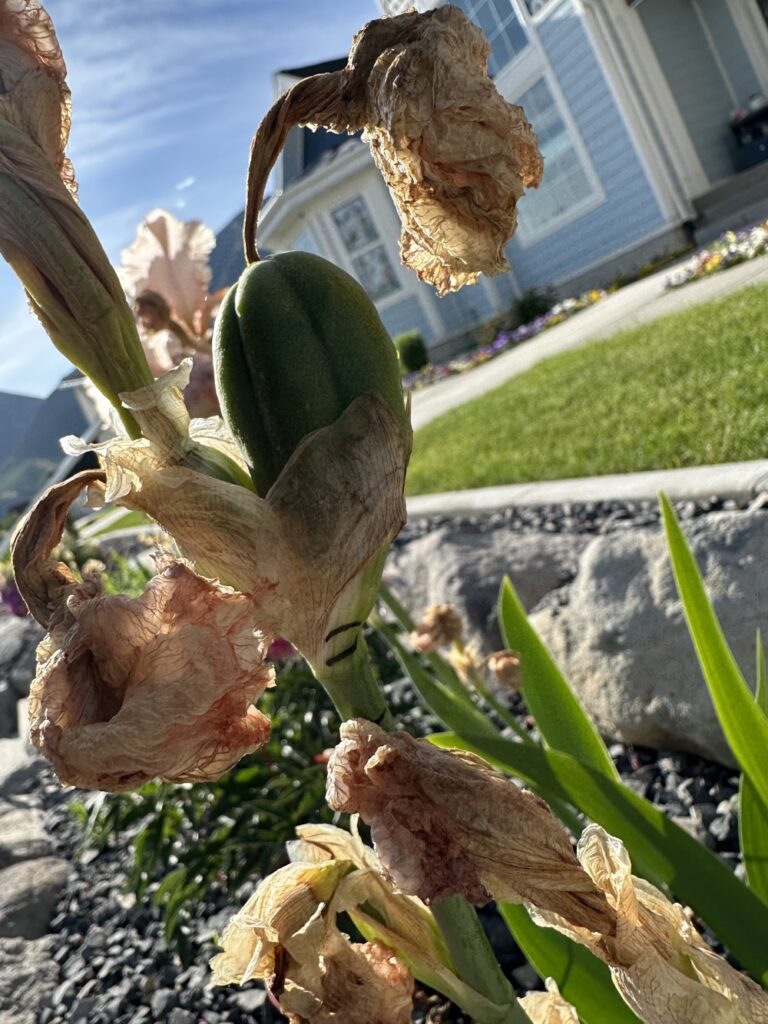
Within a few days of pollenating the iris, the bloom will close. This is a good sign that it took the pollen, but I have found that it doesn’t guarantee that the pod will successfully create seeds, but it will try.

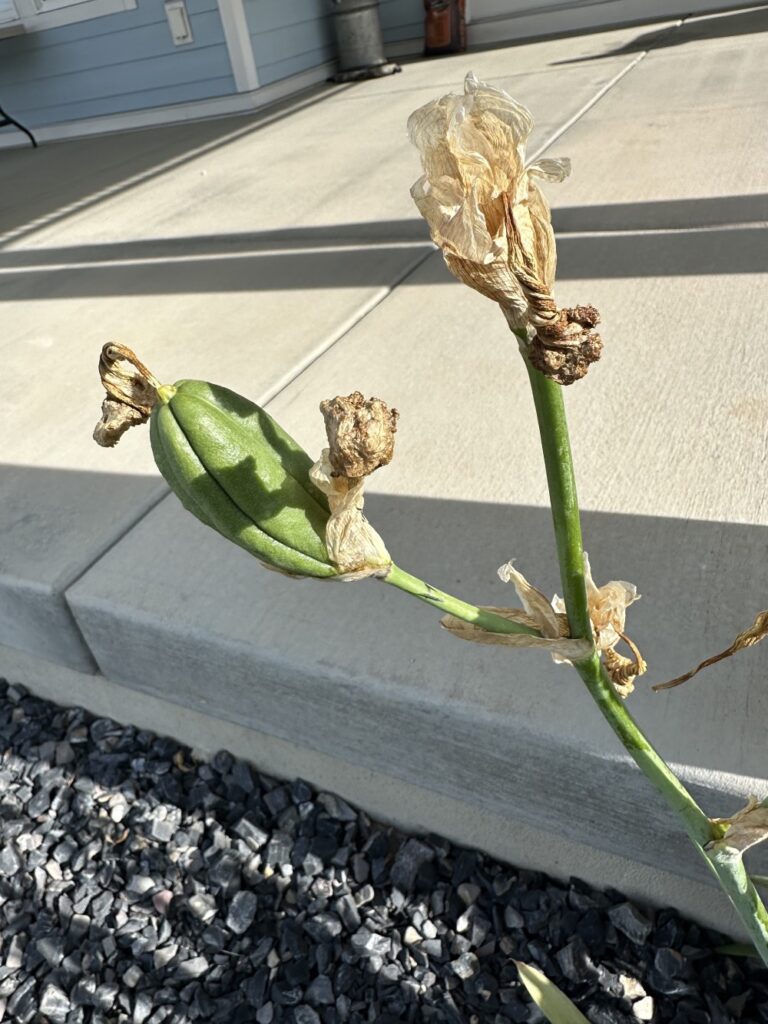
Within a few weeks the blooms start turning into pods and I was excited that it had worked.

You want to come up with an effective way to label and document your pods. I’ve used sharpies, writing on the stalks. I’ve been nervous to write directly on the pods, I’m just not sure what the ink will do to the pod. Probably harmless. The next year I used plastic labels that I could write on.  These worked better, sometimes the weather would fade them and a few cracked. Along with the labels, I would take picture or video.

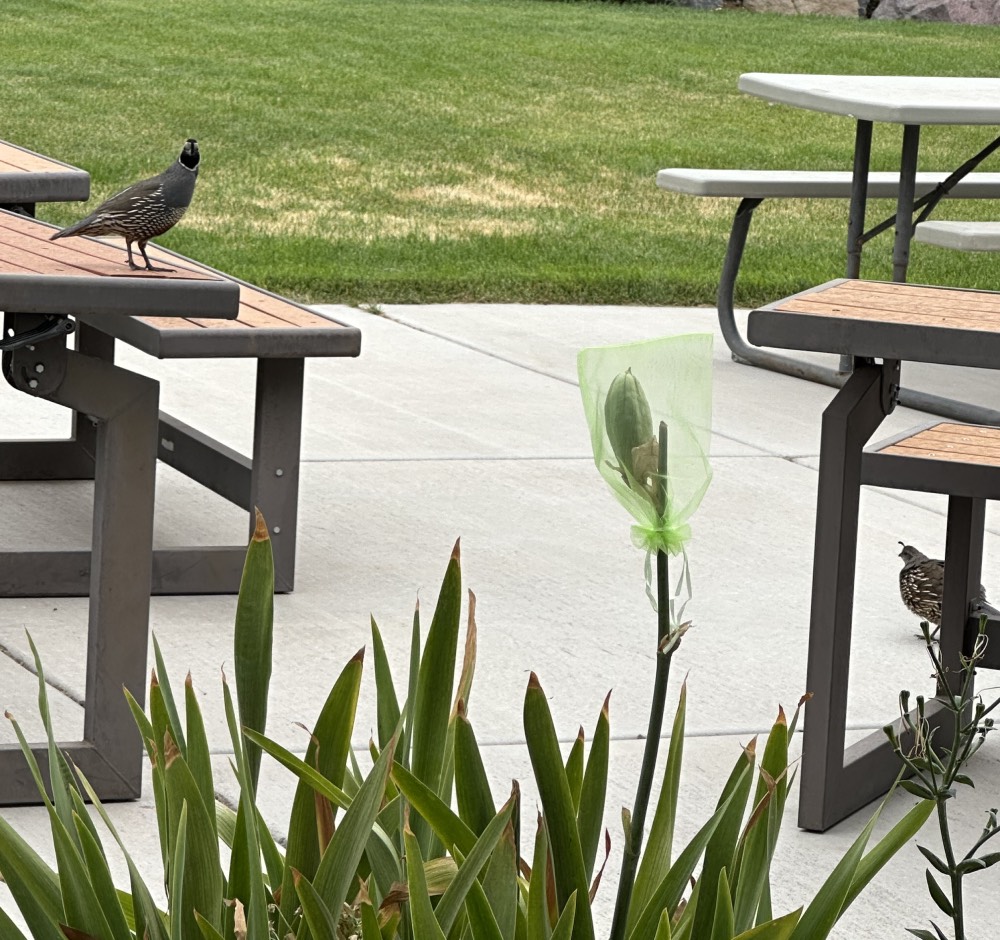
The pods will grow through the summer. As the weather starts to cool they will start to turn from green to brown. Before this happens, I like to cover them with mesh bags. This lets them keep growing but ensures I don’t loose the seeds if I miss the day that they dry enough to crack open and drop the seeds.

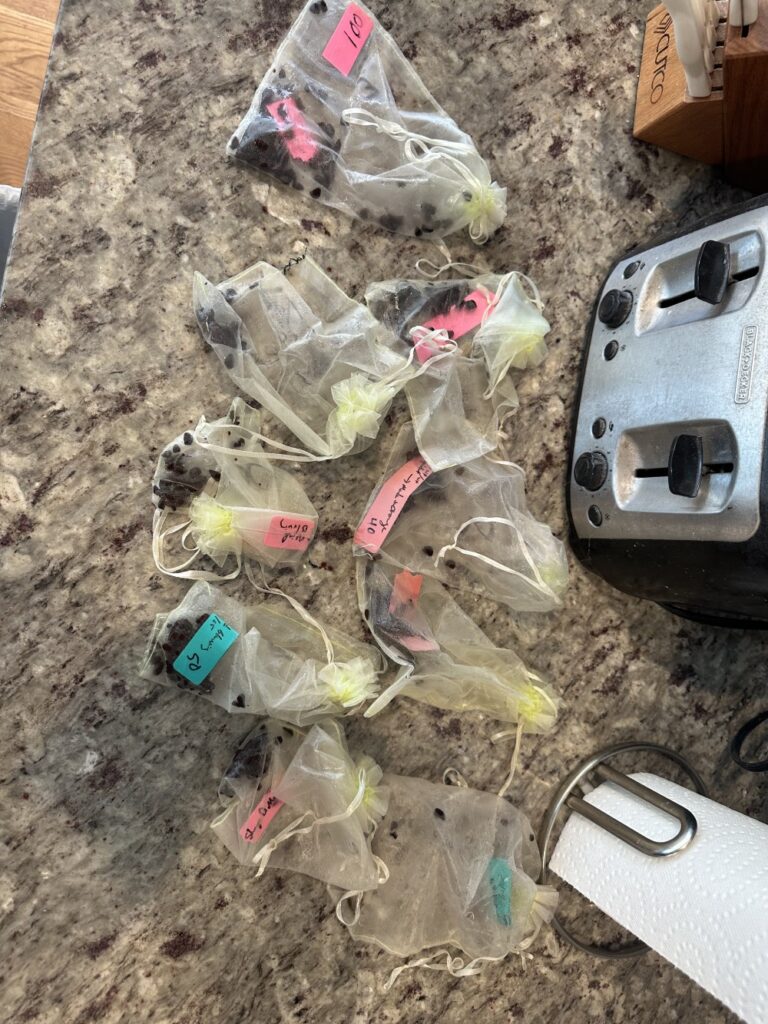
When the pods are completely brown, and before they split, I will collect them. I bring them inside and keep them in their mesh bags for a few more weeks and the pods will complete dry up and open. At this point I take out all the seeds and count and record them. They will look like plump, brown, smooth, popcorn kernels, but maybe larger. Keep them dry and let them dry for while, they will shrivel and harden. 

2023

I’ve done each year a little differently. Let’s start with 2023, I was working with 300 seeds. I had read some procedures from another hybridizer. I can’t remember who it was, when I find it I will link it here.

So the whole idea of this process is to have the seed’s winter over by January 1st, get them growing in soil under lights, and come the stirrings of spring you hope for a 6″ seedling ready to go out into the garden and if you are lucky, you see a few blooms that year. So by bypassing nature, or at least fast tracking her, I hoped to see blooms a year earlier than if they followed their own schedule.

The approach was to speed the process up, to accelerate nature a little. This made sense to me because I used to raise racing pigeons. The connection is that I would use lights to convince the pigeons it was time to start a family. I would time it to have babies before Christmas so that they could get their birthday leg bands when they are available Jan 1st and be as mature as possible for the races that year. It seemed similar.

The first steps once the seeds are dry is soaking and rinsing them for 8-10 days. The seeds are coated with a germination inhibitor. This is actually pretty cool. This inhibitor must be washed away before the seed will germinating. This is natures way of spreading out the growth of the seeds over multiple seasons. On wetter years, more seeds will germinate and be successful. In dry years, the seeds will hang out in the soil and wait.

To rinse the seeds, you will hear of different tactics. The most creative was putting them in mesh bags in the toilet tank. The key is to change the water daily. So I just put them in a bucket and changed the water every day.

After the inhibitor has been washed off, the next thing the seeds need is a long winter. The process is called stratification. I put the sees in air tight containers for the recommended 100 days.

So around New Years, I pulled the seeds out. This is were I started to worry that something wasn’t quiet right. The site I had been following showed little green sprouts when they came out of the fridge.

DON’T : Here’s our first don’t, my first mistake, and it ended up being a big one. The seeds need some moisture while in the fridge. Your fridge is actually made to keep humidity low, so I should have put some damp peat moss, or maybe a sponge in the sealed Tupperwares I was using. You don’t want standing water, just a little.

So despite my seeds not showing much life (I did have a few little sprouts), I pressed forward.

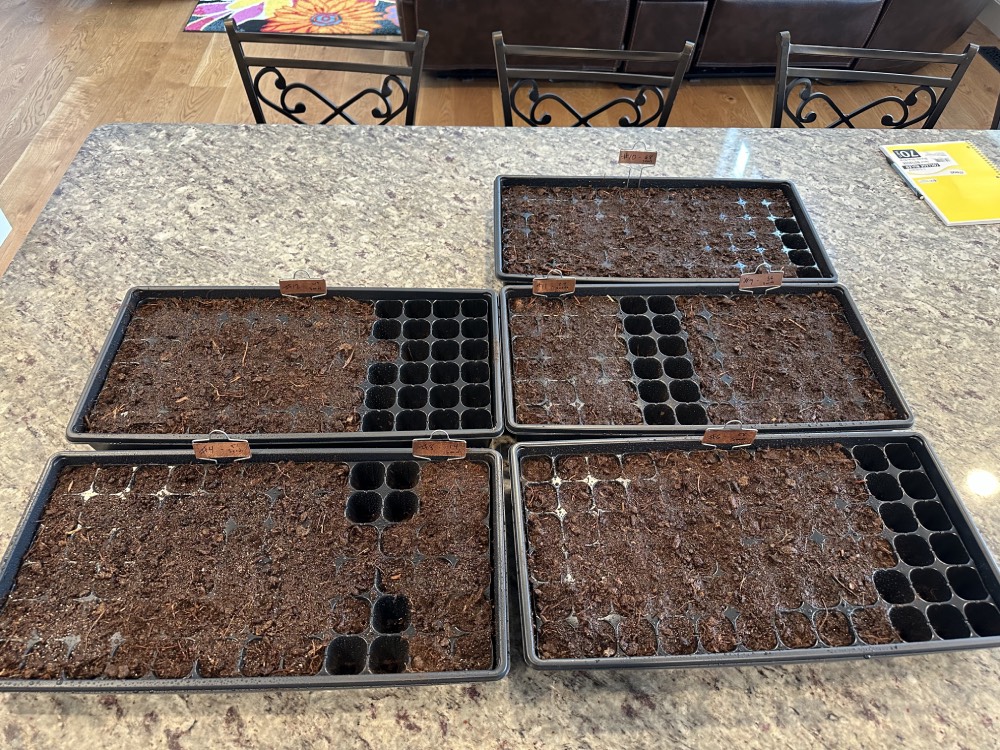
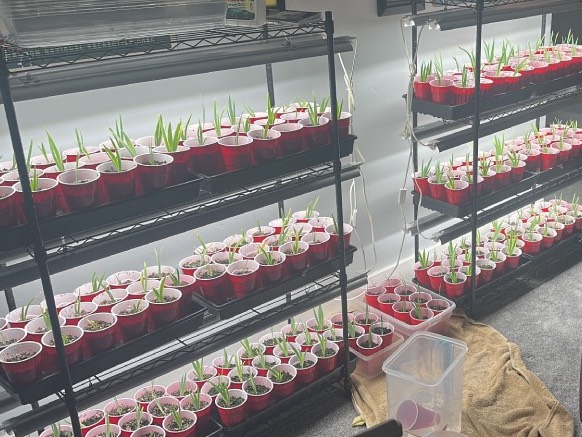
The next step was to plant the seeds in 1″x1″ planters. I thought I had watered them well, but it turned out, the water wasn’t really penetrating  the potting soil.

DON’T: This is a personal preference but I like to preload my potting soil with moisture. I stir in the water so the soil is workable, but not soaked. I do this when I plant my rhizomes too instead of just sprinkling the soil after it is planted. Get it to the roots!

After 2 weeks, I had 1, yes 1 sprout. So out of 300 seeds, I had 1 plant. I figured it would have to be a Dyches Winner to make my rookie season worth all the work I was doing.

Nope, no new plants. (Don’t worry , nature always finds a way. Just not my way.) So I was pretty frustrated. I tried one more desperate attempt. I went through the planters and found all the seeds. Well, almost all of them (this is key to the story). I found all the seeds but 3. I placed them between damp capillary mats and watched for a few more weeks hoping for some life. Again, nothing.

So I took 296 seeds and threw them out into one of my son’s garden planters. In the back of my mind I wondered if the story of these seeds was really over. Take this as foreshadowing, we will get back to these frustrating, non-cooperative seeds.

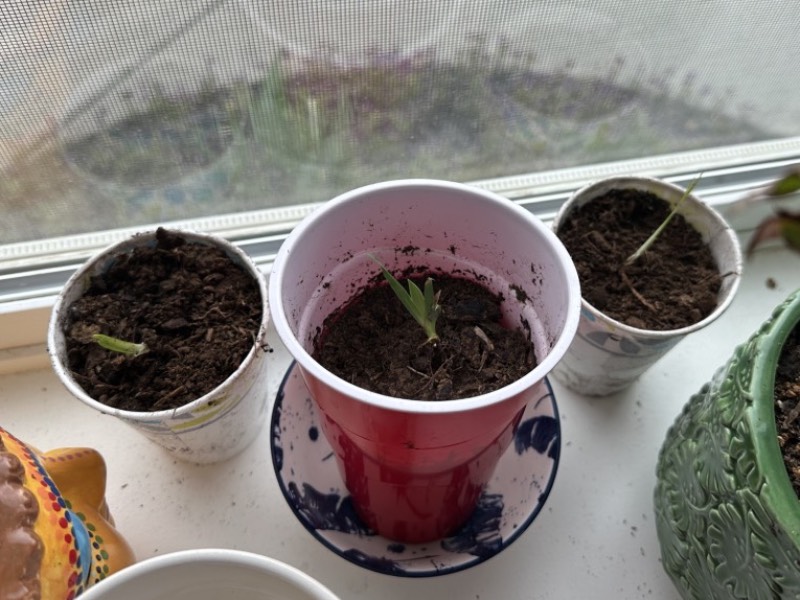
So I mentioned that I had a solo baby iris.  I put it in Solo cup, fitting, and placed it in our kitchen window plant nook. I took all the soil out of the seedling planters and dumped it into a 5 gallon bucket and stuck it in the garage. Now if you have been paying attention, you will remember that we have 3 unaccounted for seeds.  Should we talk about them now? Let’s talk about 2 of them.

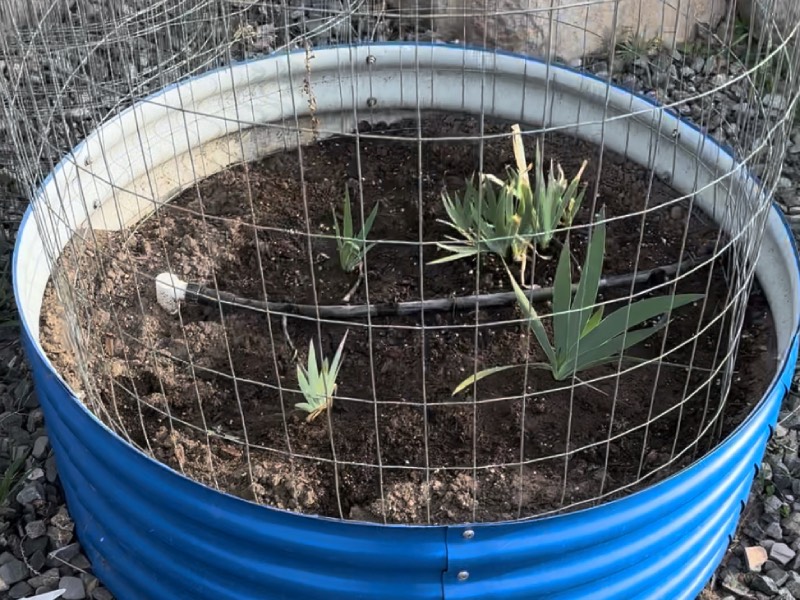
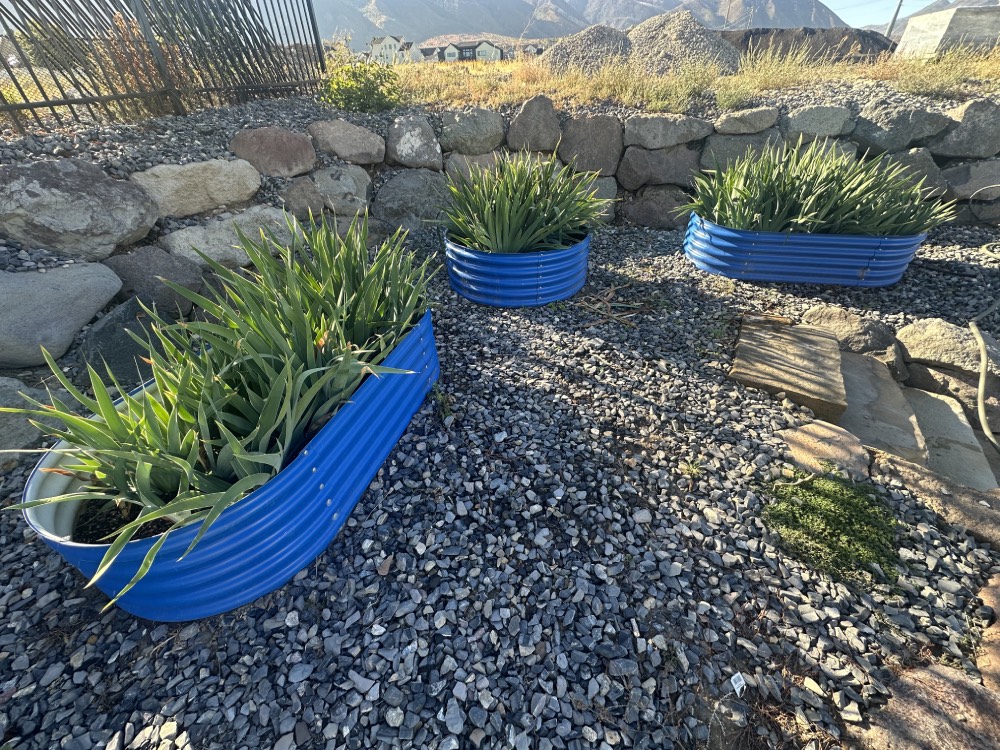
One day I was working in the garage, and something in the bucket caught my eye. Two long, stringy green stretched arms trying to find some light.  Yep, 2 of the lost seeds, after I stopped harassing them, decided to take a shot at growing. I transplanted them into their own Solo cups and the lone OG now had 2 new friends. That’s also them in the round blue planter later that year.

If you have been keeping score, there is still one seed that is unaccounted for.

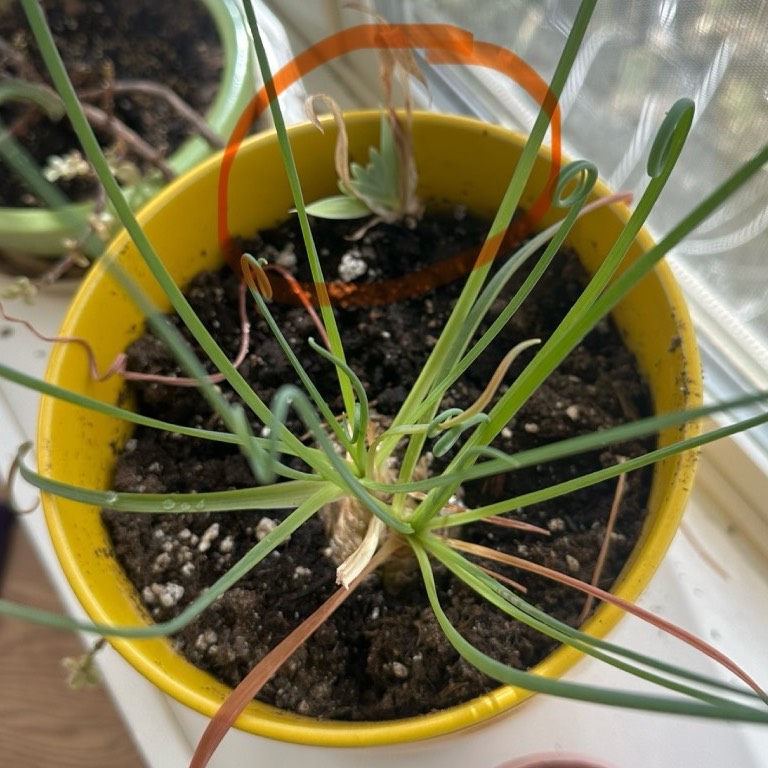
A few months later, I was sitting at the kitchen table and I noticed a familiar little shape in the side of one of my wife’s house plants. Sure enough, definitely a baby iris. Enough time had passed that I had forgotten about the last rogue seed.  Here it was, it found a way. Then I remembered that I had repotted a few of our house plants. And you guessed it, I used the potting soil from the bucket in the garage.

Another solo cup, then reunited with her friends.

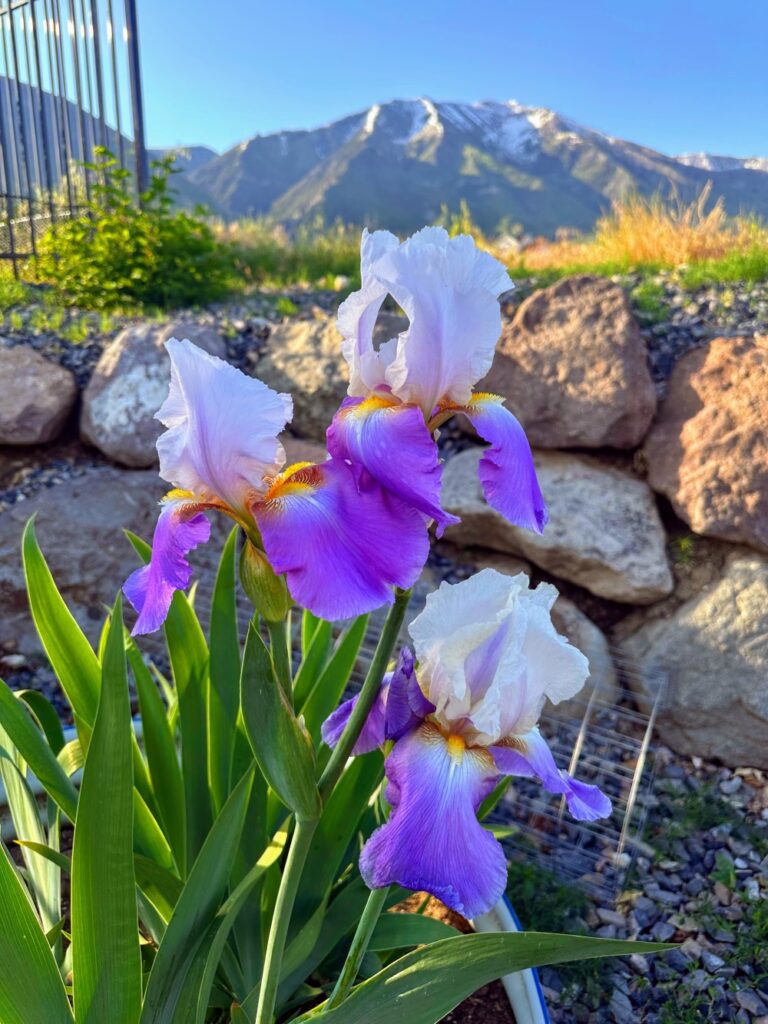
So in the spring of 2025, I had the pleasure of seeing that lone solo sprout finally bloom. Yep, 2025, so I had tried to rush Mother Nature and it all happened on her timeline.

I tried to speed it up by just a few months to get a few more bloomers. Out of the 300, my efforts brought forth 1 beautiful bloom. I was batting .3%

To use an overly exaggerated analogy, it’s like seeing your kids for the first time. They look a lot like every other kids out there, but somehow, there is something special. Something great. That’s all it took, I’m hooked on seeing those mystery buds opening. A bloom that has never ever been seen before, brand new.

I’m not sure I will propagate it, but I gave it a name. My Friend Zeb. When I was a kid, I would ride around with my Grandfather in his cattle truck, his business name painted on the trailer- “Jack’s Used Cows”. He was pretty popular in our little town and quite the personality. Everyone waved to him. And he would of course wave back. I would ask “who was that”? And he would simply say “that’s my friend Zeb”. Turns out, anyone that he didn’t know, or couldn’t remember their name, they were Zeb. So it’s fitting, because despite all my efforts and intentions, I don’t know who Zeb is since in the chaos I lost track of which seeds were which. 

If anything, by trying to speed things up, I actually slowed them down. I won’t see any more blooms from the class of 2023 until the spring of 2026. I find it funny, seriously makes me smile. 

DON’T: It’s wonderful to enjoy any interactions with Mother Nature, but do not try to tell her what to do.

We can’t move on to 2024 until we finish the story. The 296 tossed out seeds? Yeah, they found a way. The planter I threw them into, 45 plants popped up in the spring of 2025. A year later than they were told to, they didn’t care what my plans were. They decided when it was right. So I’m still only at 16.3%, but I feel like I learned enough to pass the class, with a C-.

Watch our socials, spring of 2026 is going to be colorful. Not only will we get to see the stubborn class of 2023, I figured out a few things and 2024 went better.

2024

The story will move a little quicker now. I followed the same plan more or less. I’m working with 418 seeds.

I put a little moisture in with the seeds during stratification and they were spouting when they came out. 

I pre-loaded the potting soil with water and they went right to growing.

I moved them into solo cups, but this time I had 400+ new prospects instead of last year’s lone wolf.

I noticed that every time I potted them, it seemed like I lost a few. Originally from the fridge to the seedling trays. Then seedling trays to solo cups. Finally from solo cups to planters and the field. Each time I handled them, there was a risk of loss.

This loss of plants between phases and the over all work load and also, having learned to trust Mother Nature, I made some big changes in 2025. We will get to that later.

One of the most interesting lessons of 2024 was comparing the seedlings planted in my planters at home compared to those planted in the field. 

The seedlings put in the elevated planted had a huge growth spurt. I think their soil was better, watering was more consistent, and the drainage was good. The field is in good shape, but each of these variables is more difficult to work with.

The class of 2024 is looking promising to make a spectacular appearance in the spring of 2026. Keep an eye on our socials media, hopefully we can share something incredible.

2025

I decided that I was working too hard.

The stratification wasn’t buying me any time. I live in growing zone 6A, so I have a significant winter.  No need to use fridge space.

I still did the rinse just to make sure I can maximize germination.

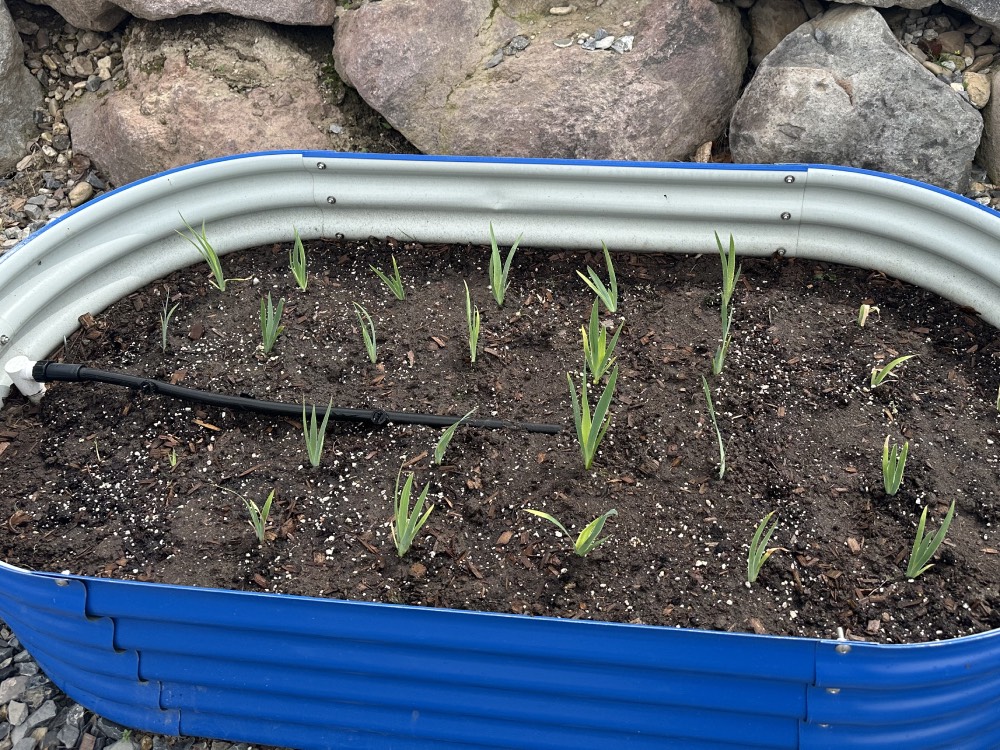
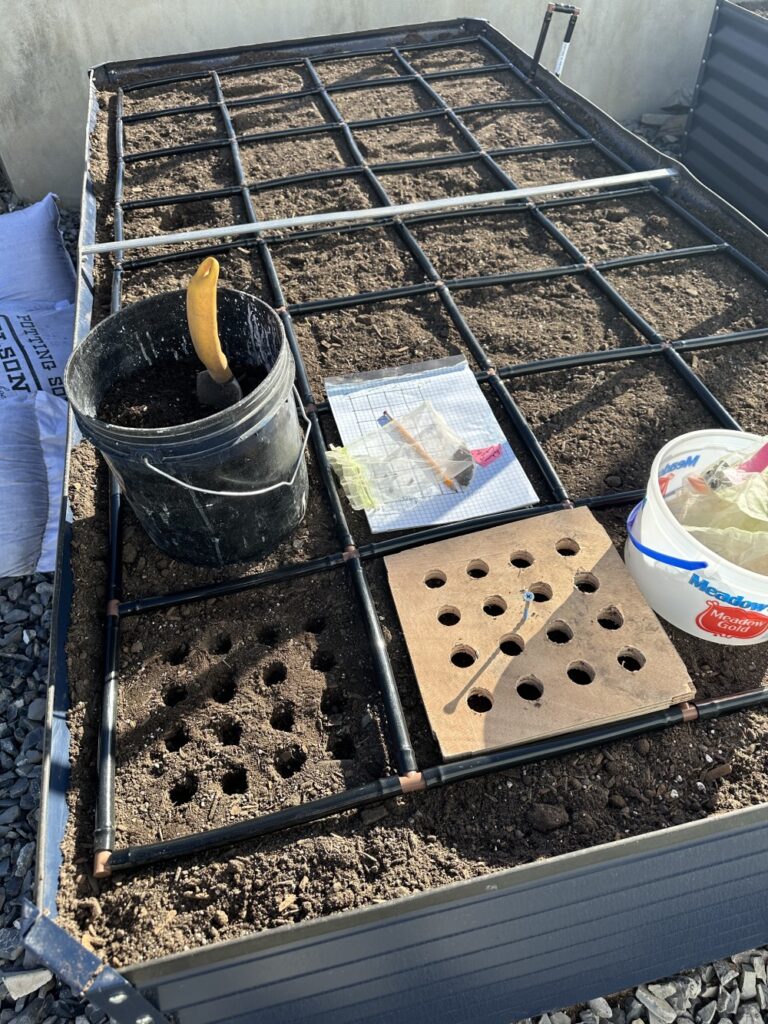
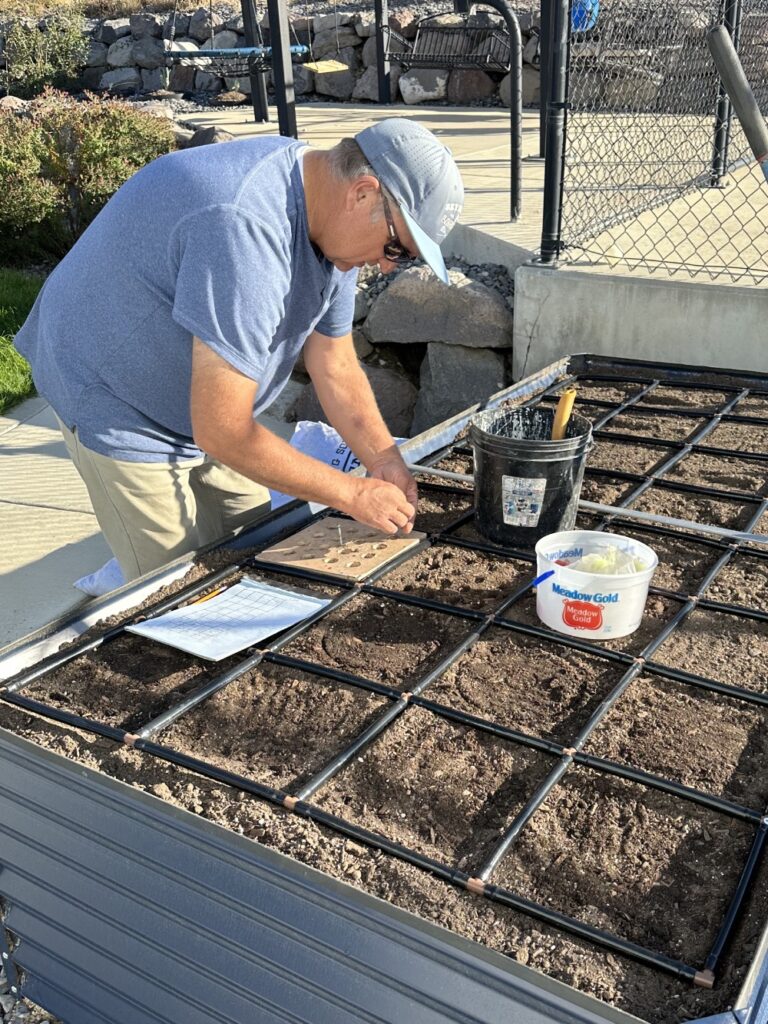
The planters showed amazing growth. So I went that route also.

And I hope that planting them where they can grow until mature, I will have fewer transfer losses.

I’m hoping to see them push through in 2026, and I hope for some new blooms in 2027.

Top Quality

Each rhizome is dug, washed and dried. Then thouroghly inspected to ensure the same level of quality that we demand of every addition to our own gardens.

Shipping

We dig in mid to late summer, and ship late summer to early fall. Look for the “DUG DATE” label on each rhizome. Our goal is to have them shipped within the next week.

Be ensured that we protect your data and your purchases. Please review our Privacy Policy prior to purchasing.